


At The Blue Gates
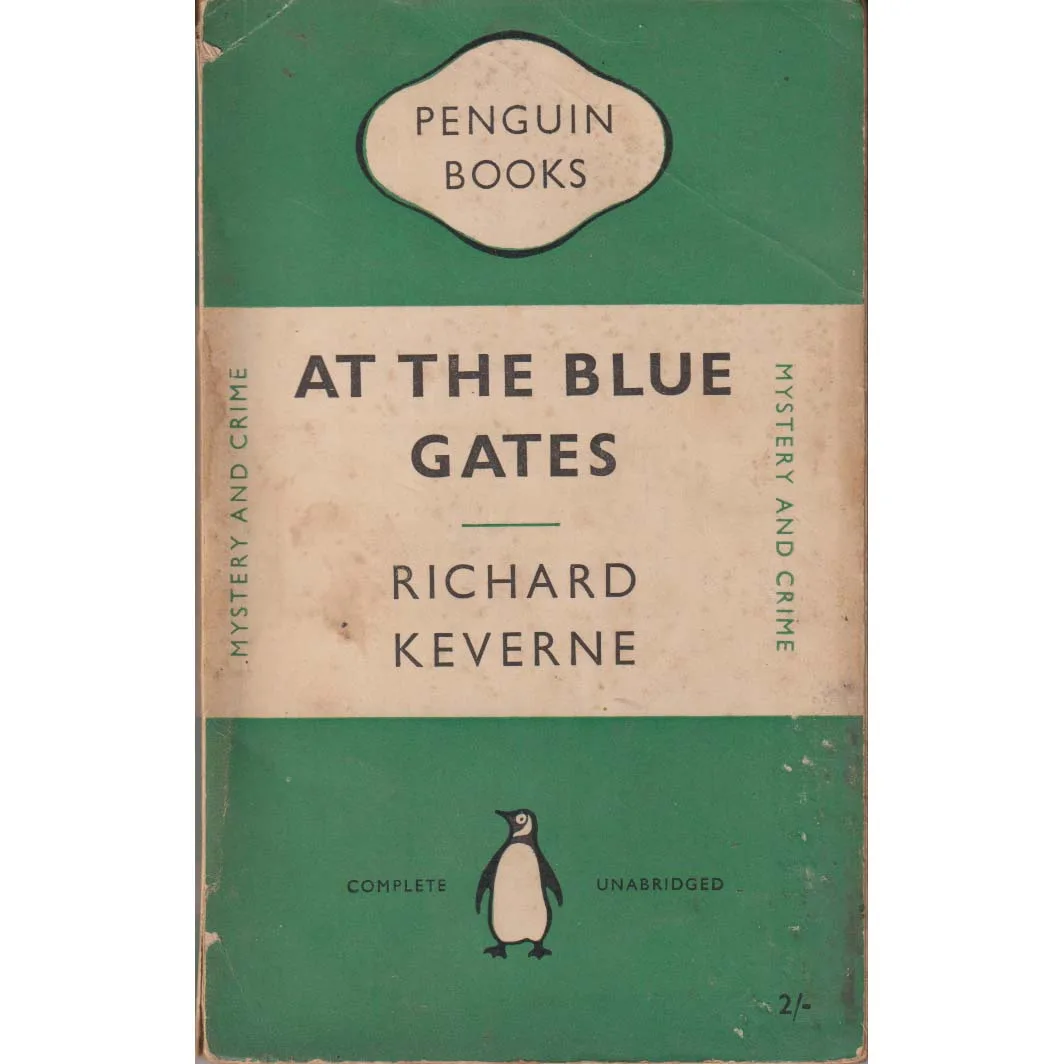
Publisher: Penguin Books
Format: Paperback
ISBN: none
At The Blue Gates (1951) by Richard Keverne is the sort of vintage Penguin paperback that looks politely harmless and then, the moment you open it, starts radiating that unmistakable mid-century confidence: we are going to Tell a Proper Story now, and you are going to like it, even if it quietly rearranges your mood while it’s at it.
Even the title has that tantalising, slightly secretive charm. Blue Gates suggests a threshold. A boundary. A place you pause before you knock, or hesitate before you go through, because you already know that once you do, things won’t be quite the same. Whether those gates lead to romance, regret, a new life, a terrible decision, or simply a very English sort of emotional complication, the promise is the same: something is waiting on the other side, and it probably has opinions.
This is exactly the kind of book that makes 1951 feel like its own weather system. There’s that post-war hush beneath everything: restraint, decency, the careful arrangement of lives, and the nagging sense that people are holding more inside than they ever say out loud. Characters don’t “process” their feelings. They endure them. They take a walk. They say something dry. They make tea. Then they do something quietly life-altering and pretend it was inevitable.
And because it’s Penguin, you get that beautifully unshowy presentation: the paperback as a promise of seriousness without fuss. It’s not trying to dazzle you with tricks. It’s trying to bring you into a world where small moments matter, where choices have weight, and where the sharpest drama often happens in the gap between what’s said and what’s meant. If you like your fiction with human awkwardness, social pressure, and the occasional emotional ambush delivered in plain, controlled prose, this has your name on it.
This copy is Condition: Good, sold by Crappy Old Books—which is exactly the correct condition for a 1951 Penguin. “Good” means it’s survived, it’s readable, and it has just enough gentle wear to suggest it has been taken seriously. A pristine copy would feel suspiciously untouched, like nobody ever stood at those blue gates and thought, “Alright then. Let’s see what happens.”
ISBN: none, because it’s 1951 and the world was still blissfully free of numbering everything like it’s stock in a warehouse. What you’re getting instead is a little piece of mid-century reading life: compact, characterful, and quietly confident that a well-told story doesn’t need to shout to land its punch.
Keep browsing: See more Mystery books Other books by Richard Keverne
